Malaysia: +603 2779 0098



“AI is promising to solve the Pathology staffing bottlenecks, and to make the workplace more interesting for Pathologists”
Dr Amal Asar
At this year’s Digital Pathology & AI Congress Europe in London, Amal Asar, Consultant Histopathologist, Northern Care Alliance, will be addressing a question important to the future: Training and retaining Pathologists in the age of AI – minefields to be wary of!
We caught up with Amal ahead of her talk to ask her about The Evolving Role of the Pathologist.
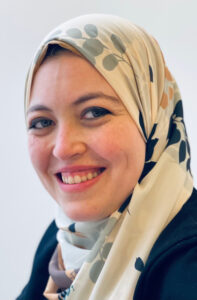 Dr Asar, you’ve described “AI as both a potential solution and a source of new challenges. In your view, how is the role of the pathologist likely to evolve as AI becomes more embedded in diagnostic workflows — and what aspects of the profession will remain uniquely human?”
As Pathologists, we are drawn to the profession by many factors, and though the pulling force for each Pathologist into choosing this path could have been different, we all share the thrill of “solving the puzzle”, where pieces come together as we work through the cases: histology, ancillary techniques, history, clinical data etc. Now in the clinical practice, we have seen examples of how AI solutions with “limited” intelligence, designed to tackle only one problem or a handful of diagnostic decisions, pre-stratify our cases into colour coded (benign, malignant, or in between). Obviously that is very helpful to triage cases and decreases the time taken to spot the relevant areas, however, in a way it erodes the thrill that comes from uncovering the small diagnostic focus of a relevant pathology, or charting a diagnostic pathway to a difficult specimen, or trying to characterise an uncommon entity, which if becomes the norm, I think we may be risking de-thrilling of the current workforce, who signed up for the profession under a totally different premise!
That set aside, the working day of the Pathologist will probably shift from making the diagnosis, requesting ancillary techniques/ genomic tests and drafting a report as the main professional activity of the day to vetting the diagnosis and approving the work up plan and pre-written reports by AI. That will ultimately spare a substantial chunk of time that is difficult to anticipate with accuracy in the current early days, but time will definitely be saved. Now a lot of this time will probably be spent doing other activities, which I like to think of as essential governance activities and R&D activities.
The essential governance activities will include quality controlling the AI software, running audits and internal quality checks, and getting updated with the most recent versions of the software (which could be frequent, given the current pace of development of AI solutions) . I also believe an essential governance activity to maintain effective human oversight would be weekly or bi-weekly sessions where we diagnose the cases independent of AI, to maintain robust skill and autonomy, something like the EQA’s we routinely do twice a year, but now they must increase in frequency to maintain skills.
The R&D activities, as the title suggests, would be the epitome of benefits the AI could potentially deliver to personalised medicine, drug discovery and disease prevention/ early detection. The data used to train the AI would need annotation, and the experimental models will need validation, testing and improvements, which I anticipate will be a shared activity between Pathologists and computational scientists.
Moving on to the second segment of your question, I envision that diagnostic insight, judgement and making sense of the findings would continue to be uniquely human. AI when faced with a decision to call something benign, malignant or pre-malignant, are comparable and sometimes exceed humans. When it comes to analysis of multiple data models or prediction of genomic status/ prognosis from the Pathology image (or Pathomics), this is an ability unique to the AI, which as Pathologists we can do in very specific situations or with very specific morphologies, but definitely cannot outperform or even compete with AI in this regard. A Pathologist however could sense that something is out of place when things are not adding up. An AI can call something malignant, but may find it difficult to separate a primary from a secondary if there is no clinical history. An AI can give a robust description of an inflammatory condition but cannot favour a possible cause in an MDT discussion or while communicating with a clinician.
Leaving the diagnostic aspect out of the picture, AI cannot perform cut up, autopsy or deliver an engaging interactive teaching to trainees. AI cannot manage laboratories, departments or contribute holistically to trust visions or departmental directions.
In the end, AI should remain an assistant, workflow optimiser, quality enhancer, a discovery probe, and a prolific data analyst. I think it will be important to bear in mind that jobs of future Pathologists will be packed with a lot of AI/ computational knowledge, but as forward thinkers and pathway charters we should plan to strike a balance between AI- heavy activities and human only activities to keep the job interesting and rewarding but at the same time efficient and safe. We want to build a future where AI is serving us, not us serving the AI.”
Catch her session at the 12th Digital Pathology & AI Congress Europe — details available at here
Amal Asar, Consultant Histopathologist, Northern Care Alliance trained in Histopathology and became a Consultant after completing a Master’s degree in Histopathology. She specialises in breast and GIT pathology, and is interested in uncovering easier ways of doing the job. She is particularly passionate about teaching and knowledge transferability in an easy memorable way. She actively contributes to Pathology AI solution research projects, which are still a work in progress. https://www.northerncarealliance.nhs.uk/
Only products with same currency can be added to the basket. Clear the basket or finish the order, before adding products with another currency to the basket.
