Malaysia: +603 2779 0098



Ever had a “gut feeling” about something? Or reached for chocolate after a stressful day? Turns out, that’s not just you being emotional—your gut microbes might be behind it.
.
Welcome to the gut-brain connection: a growing area of research revealing that the bacteria in your belly have a direct line to your brain.
.
In 2025, this is no longer just wellness fluff. It’s hard science, backed by neurologists, microbiologists, and psychiatrists alike.
.
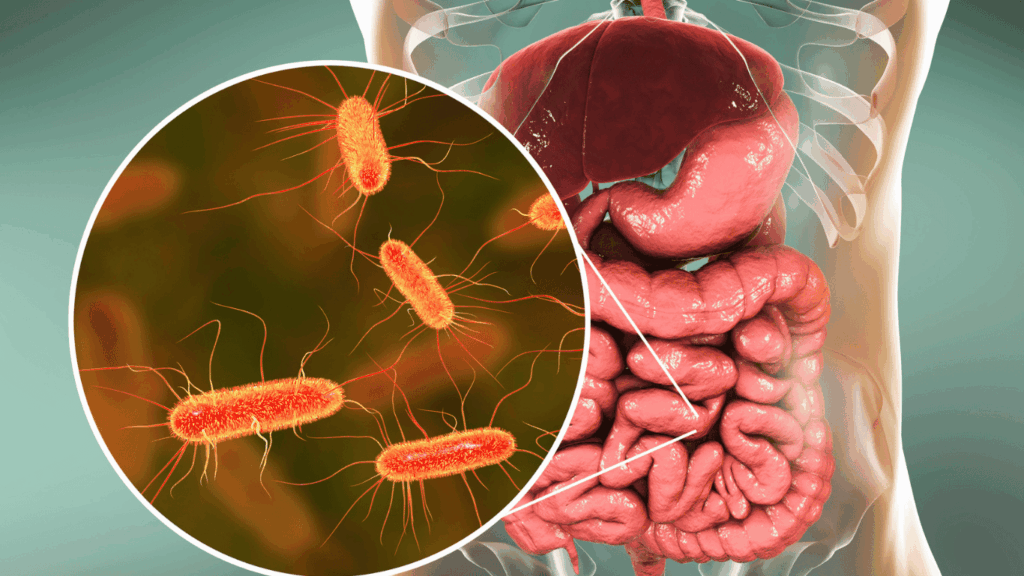
The gut-brain axis is a complex two-way communication system that links your digestive tract and your brain, constantly sending signals back and forth. This connection goes far beyond just ‘butterflies in your stomach.
.
According to Nature Reviews Gastroenterology & Hepatology, the gut-brain axis operates through neural, hormonal, and immune pathways, meaning your gut microbes can send messages that affect brain chemistry, mood, and behavior.¹
.
For example, your gut and brain are in constant chat mode — the vagus nerve is their hotline, gut bacteria help make mood chemicals like serotonin, and even your immune system gets involved. Bottom line: your digestion can totally affect how you feel and handle stress.
Feeling anxious or low may not only be ‘in your head’—it could also be linked to an imbalance in your gut microbiota. Research has shown that the gut-brain connection plays a critical role in mental health.
.
A meta-analysis published in General Psychiatry found that both probiotic and non-probiotic interventions significantly reduced symptoms of anxiety and depression, suggesting that restoring microbial balance can have a therapeutic effect.²
.
On a more specific level, animal studies demonstrate how certain strains act directly on the brain. For example, Bravo et al., 2011 reported in PNAS that the probiotic Lactobacillus rhamnosus reduced stress-induced behaviors in mice by altering GABA receptor activity—a key neurotransmitter system involved in anxiety regulation.³
.
These findings suggest that gut microbes can influence emotional well-being not just indirectly, but through measurable changes in brain chemistry and signaling pathways.
Your gut bacteria can influence how you store fat, burn energy, and even feel full after meals. Scientists have discovered that the composition of your microbiome plays a direct role in metabolism and body weight.
.
A landmark study published in Nature found that obese individuals had a less diverse microbiome compared to lean individuals. Even more striking, when gut bacteria from obese mice were transplanted into lean mice, the lean mice rapidly gained weight—demonstrating that microbes alone can drive fat accumulation and metabolic changes (Turnbaugh et al., 2006).⁴
.
More recently, specific microbes are being investigated for their protective role in metabolism. For instance, Akkermansia muciniphila has shown promise in reducing weight gain and improving insulin sensitivity, with Nature Medicine reporting that supplementation with this bacterium improved metabolic health in mice (Plovier et al., 2017).⁵
.
Together, these findings suggest that your microbiome doesn’t just reflect your health—it can actively shape your risk of obesity and metabolic disease.
Sometimes your sugar cravings are less about willpower and more about your gut bacteria demanding a snack.
.
Research from the University of California, San Francisco suggests that gut microbes can actively manipulate eating behavior by producing signaling molecules that interact with taste receptors, appetite-regulating hormones, and even mood pathways.
.
This means certain bacteria may push you toward foods that help them thrive—often sugary or high-fat options—while others may encourage healthier choices. Over time, this microbial tug-of-war can influence not only your cravings but also your overall eating habits, showing just how deeply the microbiome can shape daily behavior (Alcock et al., 2014).⁶
Your gut isn’t just digesting food—it’s helping shape how you think, feel, and even behave. With every bite, you’re feeding a community of microbes that have your brain’s number on speed dial.
.
So if you’ve been chasing serotonin in chocolate bars or feeling foggy after fast food… maybe it’s time to start thinking from the inside out.
.
Ready to go deeper?
If the gut-brain axis fascinates you as much as it fascinates neuroscientists, nutritionists, and biotech innovators, there’s one place where the future of microbiome science is coming to life—Microbiome & Probiotics R&D & Business Collaboration Forum USA 2025.
¹Boushra D, et al. The Role of Short-chain Fatty Acids in Microbiota–Gut–Brain Communication, 2019
Only products with same currency can be added to the basket. Clear the basket or finish the order, before adding products with another currency to the basket.

